The Historic Forests & Fish Law Explained
The Forests & Fish Law is an historic, science-based set of forest practices regulations that protect 60,000 miles of streams running through 9.3 million acres of state and private forestland. In 2006, the Forests & Fish Law was endorsed by the federal government, through a statewide Habitat Conservation Plan. As one of the largest and most comprehensive pieces of environmental legislation in the U.S., the law is designed to fully comply with both the federal Endangered Species Act (ESA) and the Clean Water Act (CWA) to protect Washington's native fish and aquatic species and assure clean water compliance.
Protection for forested streams
The Forests & Fish Law was developed in collaboration with federal, state, tribal, and county governments and private forest landowners. Representatives from each of these groups worked together for 18 months to make changes to the forest practices rules to protect clean water and riparian habitat on non-federal forestland in Washington State. Changes were made to improve forest roads and culverts, enlarge buffer zones along stream banks, and identify and protect unstable slopes. An Adaptive Management monitoring program has also been put into place to test the effectiveness of the new rules.
Guided by science
Adaptive Management is “learning by doing”—using the best available science to monitor and verify that forest practices are meeting standards set by the Forests & Fish Law. Forest practice rules monitored for their effectiveness at meeting resource objectives and are designed to change, if needed, based on peer-reviewed scientific study.
CMER (Cooperative Monitoring, Evaluation and Research) is the science research arm of Adaptive Management and develops scientific information to inform policy makers and the Forest Practices Board, the group responsible for making changes to forest practices rules.
Focused on collaboration
Ongoing collaboration between stakeholders is essential to creating meaningful dialogue on environmental protections and sustainable forestry.
Private forest landowners are committed to working in partnership with stakeholders, including tribes and conservation groups, to uphold and exceed the objectives of the Forests & Fish Law. Ongoing collaboration between stakeholders is essential to creating meaningful dialogue on environmental protections and sustainable forestry.
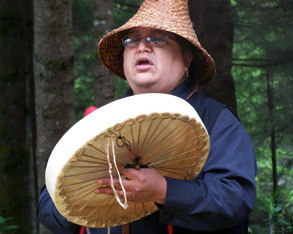
Here is an example of the collaboration and partnerships taking place between the private forest industry, tribes and conservationists in extension of the Forests & Fish Law.
Strong bipartisan support from the Washington State Legislature - 50 Year HCP Contract with Federal Government
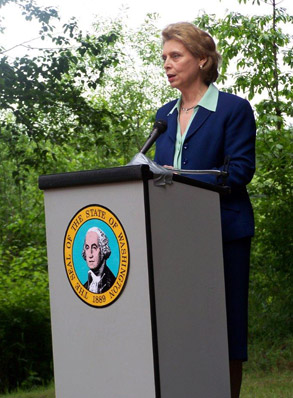
With strong bipartisan legislative support the Forests & Fish legislation (officially ESHB 2091) was passed on May 19, 1999. Former Governor Gary Locke signed it into law on June 7, 1999. This act directed the state’s Forest Practices Board to adopt permanent rules implementing forest and fish protection measures, effective July 1, 2001. On June 6, 2006, the State of Washington received approval for the 50-year Forest Practices Habitat Conservation Plan, which was accepted by Governor Gregoire on behalf of the State. A Habitat Conservation Plan (HCP) is a long-term land management plan designed to protect endangered or potentially endangered plant and animal species and their habitats.
The Forest Practices Habitat Conservation Plan (FPHCP), set in motion by the Forests & Fish Law, the largest multi-species HCP in the nation, protecting all native fish species, seven species of amphibians and 60,000 miles of streams on 8 million acres of private forestland and 1.3 million acres of state forestland in Washington. The HCP is a 50 year contract with the federal government.
The Compliance Monitoring Program (CMP) is a key component of the Washington State Department of Natural Resources’ (DNR) Forest Practices Program (FP program). Compliance monitoring is linked to DNR’s responsibility to ensure that operators and landowners are complying with the forest practices rules (FP rules) when conducting forest practices activities. Through monitoring, the CMP provides feedback to the FP program regarding the degree to which specific FP rules are being implemented correctly, and where there is a need for focus, training, or clarity.